How to Track Habits Without Obsessing Over Streaks
Streaks motivate until one missed day wrecks your motivation. Here's a healthier way to track habits — and stay consistent long-term.
You open your habit tracker and see it: a bright red notification that your 47-day streak is gone. You were sick yesterday. You slept through the reminder. You just forgot. Whatever the reason, the app has already decided it means one thing: you are back at zero.
If that moment has ever made you want to delete the app entirely, you are not alone. The streak is one of the most popular motivational tools in habit tracking — and one of the most punishing.
Why streaks work… until they don't
Streaks are effective because they tap into loss aversion. Once you see a number growing, your brain treats it as something you own, and missing a day feels like losing it. That pressure can carry you through the early weeks of a new habit, when motivation is fragile.
There is also a real cultural story behind streaks. The "Don't Break the Chain" method, often attributed to Jerry Seinfeld, suggests that marking an X every day builds momentum. And it does — for a while.
The problem is that streaks reward an impossible standard: perfect execution in an imperfect life. Illness, travel, family emergencies, burnout, and plain bad days are not bugs in your routine. They are part of being human. When your tracker turns a missed day into a public failure, it teaches you that consistency means never slipping. That is not consistency. That is rigidity.
Where streaks break people
- All-or-nothing thinking. One miss becomes "I failed, so I might as well quit."
- Streak-freeze dark patterns. Some apps sell tokens or features that let you buy back a missed day, gamifying guilt.
- Dishonest tracking. Users mark habits complete just to keep the number alive, defeating the purpose of self-awareness.
- Streak anxiety. The fear of losing a number can become its own source of stress.
None of this means streaks are evil. They are a tool, and like any tool, they work best for some people and some goals. But if your tracker is making you feel worse, not better, it is time for a different system.
The reframe: consistency over perfection
A healthier approach treats habit tracking as a feedback system, not a scoreboard. The goal is not a perfect line. The goal is a reliable pattern over time.
James Clear calls this "Never Miss Twice." Missing one day is a mistake; missing two is the start of a new pattern. The recovery matters more than the slip.
Another useful reframe comes from looking at weekly or monthly completion rates instead of consecutive days. A habit you complete 5 out of 7 days is an 71% habit. That is strong. A streak-focused app would call those two missed days failures. A trend-focused tracker calls it normal life.
A practical streak-free tracking system
- Track status honestly. Use more than "done" or "missed." A skipped day is different from a failed day. Skipping because you planned a rest day is not the same as forgetting.
- Measure weekly completion rate. Look at what percentage of scheduled days you completed. 70–85% is excellent for most habits.
- Use skips intentionally. Deliberate skips protect long-term consistency. They prevent the "well, I already ruined it" spiral.
- Pause deliberately for vacations. Instead of abandoning a habit because you are traveling, pause it. The habit stays alive; the counter just takes a nap.
- Review monthly trends. Are you completing the habit more often this month than last month? That is real progress. A daily streak number cannot show it.
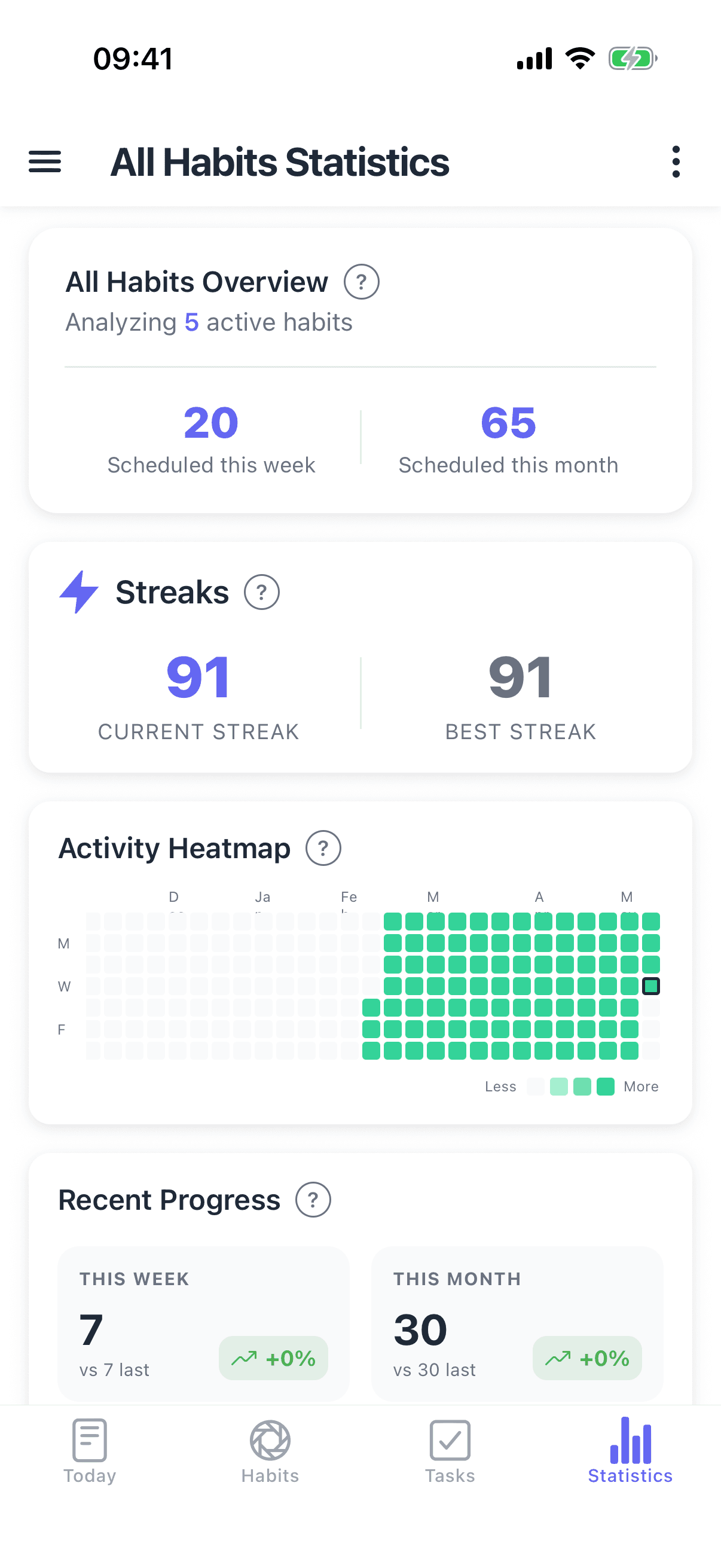
Consistency trends show the pattern, not just the count.
How HabitGrip supports this
HabitGrip was designed around the idea that a habit tracker should help you understand yourself, not punish you. A few specific choices support a streak-free approach:
- Done, skipped, and failed. You can log a skipped day without resetting a counter. The data stays honest, and the shame does not.
- Vacation mode. Pause any habit — or all of them — for a set period. Your history stays intact, and the habit resumes when you do.
- Trend and momentum charts. Instead of one big streak number, HabitGrip shows how your consistency changes over time, plus which days of the week you perform best.
- Offline and private. There are no ads, no leaderboards, and no social comparison. Your data lives on your device unless you choose to sync it.
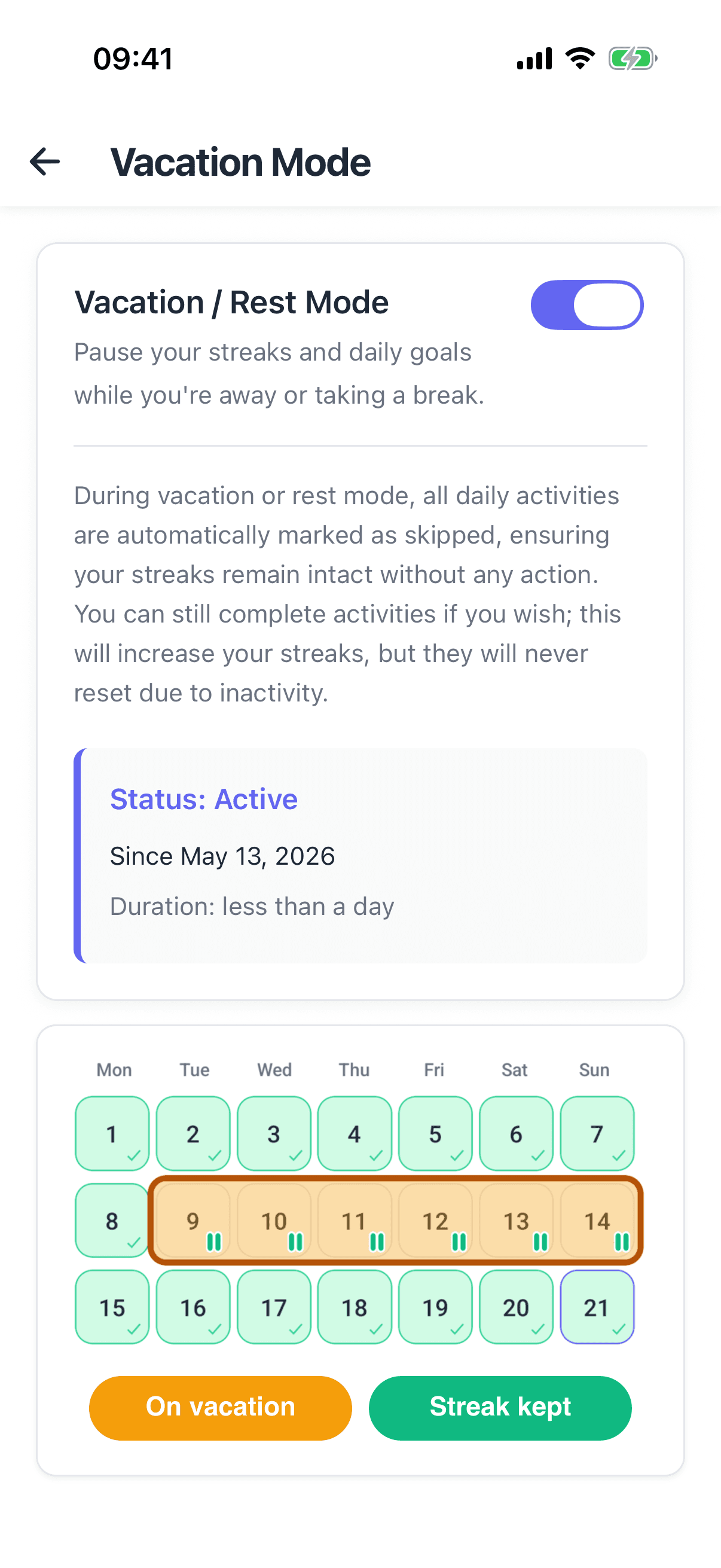
Vacation mode lets you pause habits without guilt.
The result is a tracker that bends around real life instead of breaking when life gets real.
Frequently asked questions
Do streaks actually help build habits?
Streaks can help at first by making a behavior feel rewarding and automatic. But research shows that identity-based habits and consistency over time matter more than perfect daily counts. When a streak becomes the only measure of success, a single missed day can derail motivation entirely.
What is a good weekly completion rate for a habit?
For most habits, completing the activity 70–85% of scheduled days is excellent. Aiming for 100% is unrealistic for most people and can create unnecessary stress. Track the trend, not perfection.
Should I restart after breaking a streak?
No — restart the behavior, not the counter. Missing once is a normal part of building long-term habits. The key is to avoid missing twice. Mark the day honestly, note what happened, and pick up the habit at the next scheduled time.
A calmer way to stay consistent
The best habit tracker is the one you do not dread opening. If your current app makes you feel like a failure after one missed day, the problem is not you. It is the system.
Track honestly. Skip deliberately. Pause when you need to. Look at the trend. That is how habits actually last.
If you want to see how these ideas map to a concrete framework, read our guide to applying Atomic Habits to a habit tracker.
Try a tracker that treats you like an adult
HabitGrip helps you build habits without the stress of streaks. Track offline, skip days honestly, and use vacation mode when life gets busy.